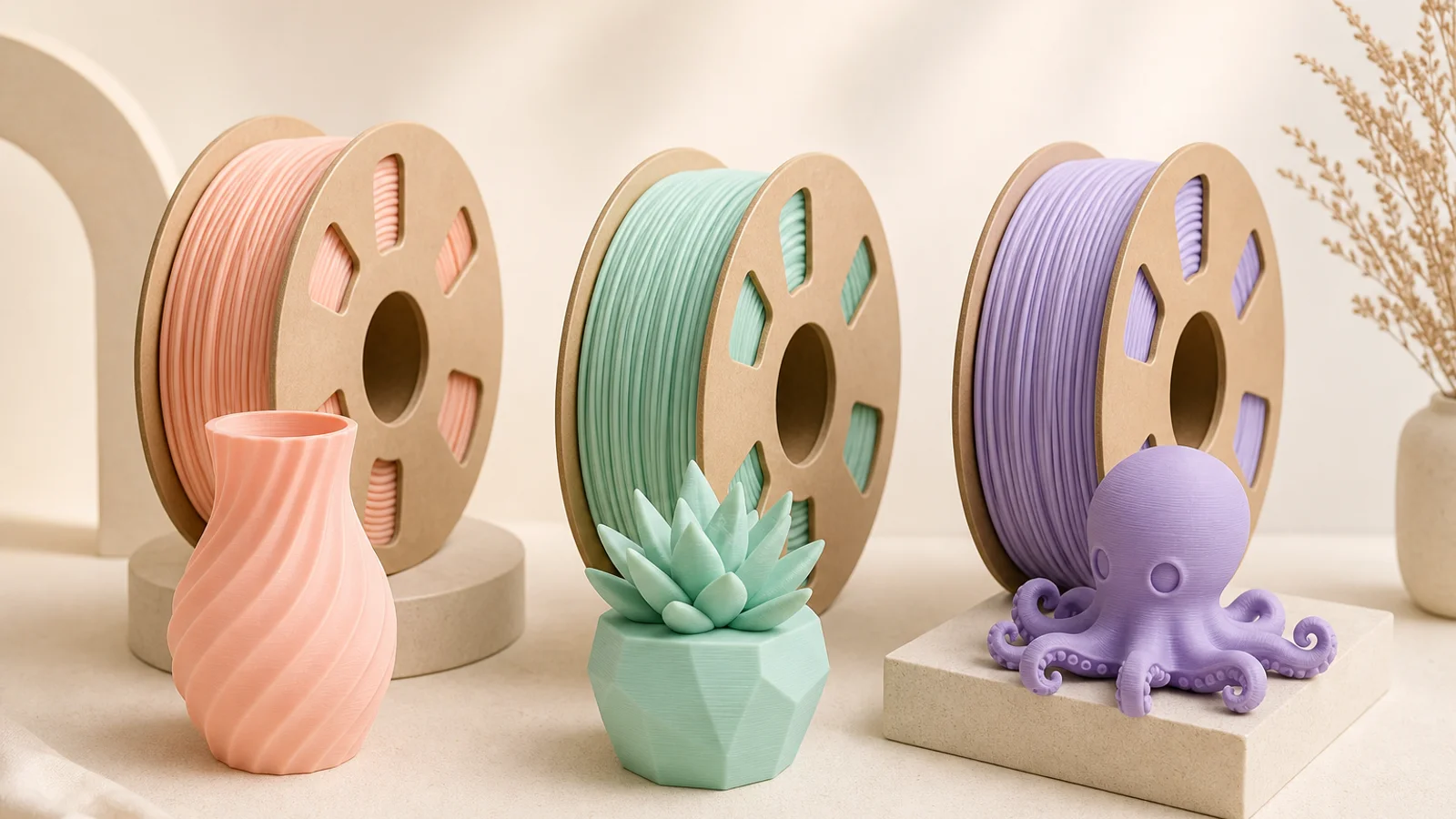
Choosing 3D printing filament looks simple at first.
You see a spool.
It is plastic.
The printer melts it.
A thing appears.
Wonderful. Future achieved. Everyone can go home.
Then you start looking at filament types and suddenly the spool aisle becomes a personality test.
PLA.
PETG.
ABS.
TPU.
Nylon.
Carbon fiber blends.
Silk PLA.
Wood-filled filament.
Glow-in-the-dark filament, because apparently plastic wanted a nightlife.
Each material has its own strengths, problems, temperatures, smells, flexibility, print behavior, and tiny emotional demands.
The beginner mistake is thinking filament is just color.
It is not.
Filament is the material your object will actually be made from, which means it affects strength, flexibility, heat resistance, surface finish, print difficulty, and whether your printer spends the afternoon calmly building an object or producing hot spaghetti with confidence.
So let’s make the main types less mysterious.
The simple version
Filament is the material used by many common 3D printers, especially FDM or FFF printers.
It usually comes as a plastic strand wound onto a spool.
The printer pulls the filament in, melts it through a heated nozzle, and lays it down layer by layer.
If you want the full process from model to object, I explained it in my beginner guide to 3D printing basics. This article is just about the material part: what the plastic is, how it behaves, and why choosing the wrong one can make a simple print much harder than it needed to be.
The short version:
- PLA is easiest for beginners.
- PETG is tougher but stringier.
- ABS is stronger and heat-resistant, but more demanding.
- TPU is flexible, useful, and occasionally dramatic.
- Specialty filaments are fun, but not always beginner-friendly.
There is no perfect filament for everything.
There are only tradeoffs.
3D printing loves tradeoffs. It collects them like cables in a drawer.
PLA: the beginner-friendly one
PLA is usually the best starting point.
It prints at relatively low temperatures, sticks well on many beds, warps less than more demanding materials, and generally behaves like it wants beginners to have a decent first experience.
This is rare and should be appreciated.
PLA is good for:
- decorative prints;
- prototypes;
- toys;
- simple brackets;
- display models;
- learning printer settings;
- low-stress objects;
- prints where heat resistance is not important.
PLA is popular because it is easy.
Not perfect.
Easy.
The main weaknesses are heat resistance and toughness.
PLA can soften in warm conditions. A PLA part left inside a hot car may become a sad modern sculpture.
It can also be more brittle than some other materials.
So I would not use PLA for parts that need to handle high heat, constant stress, outdoor weather, or serious mechanical load.
But for learning?
PLA is excellent.
If you are just starting, PLA is the friendly door.
Not the final door.
The friendly one.
Silk PLA: pretty, but slightly vain
Silk PLA is a variation of PLA with a shiny finish.
It can look beautiful.
Very glossy.
Very smooth.
Very “I would like to be photographed from my good side.”
It is popular for decorative objects, vases, figures, signs, and display pieces.
The tradeoff is that silk PLA can sometimes be weaker or more brittle than regular PLA, depending on the brand and formulation.
It may also show layer lines differently because of the shine.
Silk PLA is not what I would choose for a functional part that needs strength.
But for something decorative?
Absolutely.
Sometimes plastic deserves to wear a nice outfit.
Just do not confuse shiny with strong.
This advice also works for several people on the internet.
PETG: tougher, but stringier
PETG is a common next step after PLA.
It is often tougher, less brittle, and more heat-resistant than PLA.
It can be useful for practical parts that need more durability.
PETG is good for:
- functional parts;
- brackets;
- containers;
- clips;
- parts that need some flexibility;
- prints that need better heat resistance than PLA;
- objects that may see more handling.
But PETG has habits.
It can be stringy.
It can ooze from the nozzle.
It can stick too well to some build surfaces.
It can leave little hairs between parts of the print, as if the model walked through a spider web and refused to talk about it.
PETG often needs careful tuning of:
- nozzle temperature;
- retraction;
- print speed;
- cooling;
- bed adhesion.
It is not impossible for beginners.
It is just less forgiving than PLA.
If PLA is the calm friend who shows up on time, PETG is the useful friend who helps you move furniture but somehow leaves tape on the floor.
Worth it.
Slightly more work.
ABS: strong, useful, and not here to make your life easy
ABS is known for strength, toughness, and better heat resistance.
It is used in many real-world plastic products.
That sounds great.
Then you try printing it.
ABS can warp.
It can smell.
It usually prefers an enclosure.
It does not love drafts.
It needs higher temperatures.
It may require better ventilation.
It can crack or lift if the print environment cools unevenly.
ABS is useful for:
- functional parts;
- stronger objects;
- heat-resistant parts;
- parts that may be sanded or post-processed;
- items that need more toughness than PLA.
But I would not recommend ABS as a first filament for most beginners.
Not because it is bad.
Because it is needy.
ABS wants a controlled environment.
It wants the bed warm.
It wants the air around the print stable.
It wants you to stop opening the printer area every five minutes like a nervous raccoon.
If you need ABS properties, learn it.
If you are just starting, maybe let PLA teach you the basics before ABS teaches you humility.
ASA: ABS with outdoor ambitions
ASA is similar to ABS in some ways, but it is often better for outdoor use because it has stronger UV resistance.
That makes it useful for parts exposed to sunlight.
ASA can be good for:
- outdoor brackets;
- weather-exposed parts;
- automotive-like prints;
- functional parts needing UV resistance;
- stronger practical objects.
But ASA still has many of the print challenges people associate with ABS.
It likes an enclosure.
It can warp.
It needs higher temperatures.
It should be printed with attention to ventilation.
So if PLA is beginner-friendly and PETG is the practical step up, ASA is more like:
I have a reason to print this material, and I am willing to tune the process.
Which is a fine place to be.
Just not usually day one.
TPU: the flexible one
TPU is flexible filament.
This makes it extremely useful and mildly chaotic.
TPU can bend, stretch, and compress depending on its hardness.
It can be used for:
- phone cases;
- flexible feet;
- seals;
- grips;
- bumpers;
- wearable parts;
- protective covers;
- soft hinges;
- vibration-dampening parts.
The trouble is that flexible filament can be harder to push through the printer.
Imagine trying to feed cooked spaghetti through a precise machine.
That is too dramatic, but emotionally not far off.
TPU often needs:
- slower print speed;
- careful extruder setup;
- reduced retraction;
- good filament path control;
- patience;
- possibly a small motivational speech.
Direct drive extruders usually handle TPU better than long Bowden setups, although many printers can manage it with tuning.
TPU is not the first filament I would give a complete beginner.
But it is one of the most satisfying materials once you understand your printer.
A rigid printer making a flexible object feels slightly magical.
The good kind.
Not the “why is this failing again” kind.
Nylon: strong, slippery, and moisture-hungry
Nylon is strong, tough, and flexible compared with many common materials.
It can be great for functional parts.
It can also be annoying.
Nylon absorbs moisture from the air very easily.
Wet nylon can print badly, causing bubbles, rough surfaces, weak parts, and strange extrusion issues.
This means nylon often needs careful drying and storage.
It may also require higher temperatures, a good hot end, strong bed adhesion, and sometimes an enclosure.
Nylon can be good for:
- gears;
- hinges;
- mechanical parts;
- durable functional pieces;
- parts needing toughness and wear resistance.
But beginners should not casually grab nylon because it sounds strong.
Strong material does not help if you cannot print it well.
A badly printed strong material can produce a weak part with excellent marketing.
Start simple.
Earn the weird materials.
Carbon fiber blends: stiff, sharp, and not for every nozzle
Carbon fiber-filled filaments mix tiny fibers into a base material like PLA, PETG, nylon, or ABS.
These materials can be stiffer, more dimensionally stable, and visually attractive with a matte finish.
They can be useful for functional parts where stiffness matters.
But they are abrasive.
That means they can wear down a standard brass nozzle.
If you print carbon fiber blends, you may need a hardened steel or other wear-resistant nozzle.
Carbon fiber blends can also be more brittle depending on the base material and formulation.
So again, the label alone is not enough.
Carbon fiber PETG is not the same as carbon fiber nylon.
The base material still matters.
The fibers change behavior.
The nozzle choice matters.
This is why 3D printing refuses to be one simple chart.
Every answer has a small trapdoor.
Wood, metal, and glow filaments
Specialty filaments can be fun.
Wood-filled filament can look more organic.
Metal-filled filament can feel heavier.
Glow-in-the-dark filament can glow.
Very mysterious.
Very “my plastic object has chosen nightlife.”
But specialty filaments often come with tradeoffs.
They may:
- clog more easily;
- need larger nozzles;
- wear nozzles faster;
- require slower printing;
- be more brittle;
- need extra tuning;
- have weaker mechanical properties;
- produce rougher surfaces.
They are great for experiments and decorative projects.
I would not choose them for important functional parts unless I understood the material well.
Specialty filaments are like dessert.
Fun.
Not the foundation of the meal.
Unless you are making very questionable life choices.
How to choose filament as a beginner
I would choose filament by asking what the part needs to do.
Not:
What color looks cool?
Although color matters emotionally. I am not made of stone.
Better questions:
- Is this decorative or functional?
- Will it be indoors or outdoors?
- Will it get hot?
- Does it need to bend?
- Does it need to be strong?
- Will it be handled often?
- Does it need to resist sunlight?
- Does it need to fit precisely?
- Is my printer ready for this material?
For most beginners:
Start with PLA.
Then try PETG when you want more durability.
Try TPU when you specifically need flexibility.
Try ABS or ASA when you need heat resistance or outdoor performance and have the printer setup to handle it.
Try nylon or carbon fiber blends when you have a reason and are ready for tuning.
That is not a law.
It is a sanity path.
Sanity paths are useful in hobbies involving hot plastic.
Filament storage matters
Filament can absorb moisture.
Some materials absorb more than others.
Wet filament can cause:
- popping sounds;
- stringing;
- rough surfaces;
- weak prints;
- bubbles;
- inconsistent extrusion.
PLA can absorb moisture over time.
PETG can be affected.
Nylon is famously moisture-hungry.
TPU can also absorb moisture.
A dry spool usually prints better than a damp spool.
Basic storage habits help:
- keep filament in sealed bags or boxes;
- use desiccant;
- avoid leaving moisture-sensitive materials exposed;
- dry filament when needed;
- label materials and brands.
This sounds boring until you spend two hours changing slicer settings and discover the real issue was that your filament had been quietly drinking the room.
I covered more print failure clues in why 3D prints fail, but wet filament is one of those sneaky problems that can imitate other problems.
Very rude.
Very common.
Slicer settings change by material
Different filaments need different slicer settings.
PLA settings are not PETG settings.
PETG settings are not TPU settings.
ABS settings are not “just PLA but hotter.”
Each material may need changes to:
- nozzle temperature;
- bed temperature;
- cooling;
- print speed;
- retraction;
- first-layer settings;
- enclosure use;
- fan behavior.
This is why slicer profiles are helpful.
You can create or choose profiles for each material type.
I explained slicers separately in what a 3D printing slicer actually does, but the short version is:
The slicer translates the model into printer instructions, and material settings are part of that translation.
A good material with bad settings can still print badly.
The plastic matters.
The instructions matter too.
3D printing is teamwork between things that cannot talk.
Which is inconvenient.
My practical material map
Here is the short version I would keep near the printer.
PLA
Best for beginners, decorations, prototypes, and easy prints.
Silk PLA
Best for shiny decorative objects, not serious strength.
PETG
Best for tougher functional parts when you can handle some stringing and tuning.
ABS
Best for stronger, heat-resistant parts if you have enclosure and ventilation.
ASA
Best for outdoor functional parts if your setup can handle ABS-like printing.
TPU
Best for flexible parts, printed slowly and patiently.
Nylon
Best for tough mechanical parts, but needs drying and a capable printer.
Carbon fiber blends
Best for stiffness and matte functional prints, but may need a hardened nozzle.
Specialty filaments
Best for experiments and decorative effects, not usually beginner basics.
That map is not perfect.
But it is better than choosing based on color and vibes alone.
Although color and vibes do remain spiritually important.
My take
Filament is not just plastic.
It is the physical personality of the print.
PLA wants to help you start.
PETG wants to be useful but leaves strings behind.
ABS wants strength and heat resistance, but demands better conditions.
TPU bends, stretches, and makes your extruder think.
Nylon is tough but thirsty.
Carbon fiber blends look serious and chew through soft nozzles.
Specialty filaments are fun little chaos objects.
The beginner goal is not to try every filament immediately.
The goal is to match the material to the job.
Ask what the object needs.
Then choose the filament.
Then use slicer settings that respect the material.
That is the whole practical chain:
purpose → material → settings → print
When that chain makes sense, filament stops feeling like a wall of confusing spool labels.
It becomes a set of options.
Still full of tradeoffs.
Still capable of drama.
But understandable.
And in 3D printing, understandable is a very good day.

Jane Calder
I'm Jane Calder, the writer behind Jane Decodes. I research AI, crypto, 3D, web technology, and strange science rabbit holes, then turn them into plain-English explanations for people who like learning but dislike being attacked by jargon.
Usually powered by coffee, browser tabs, and the stubborn belief that almost anything can be explained better.
Related posts
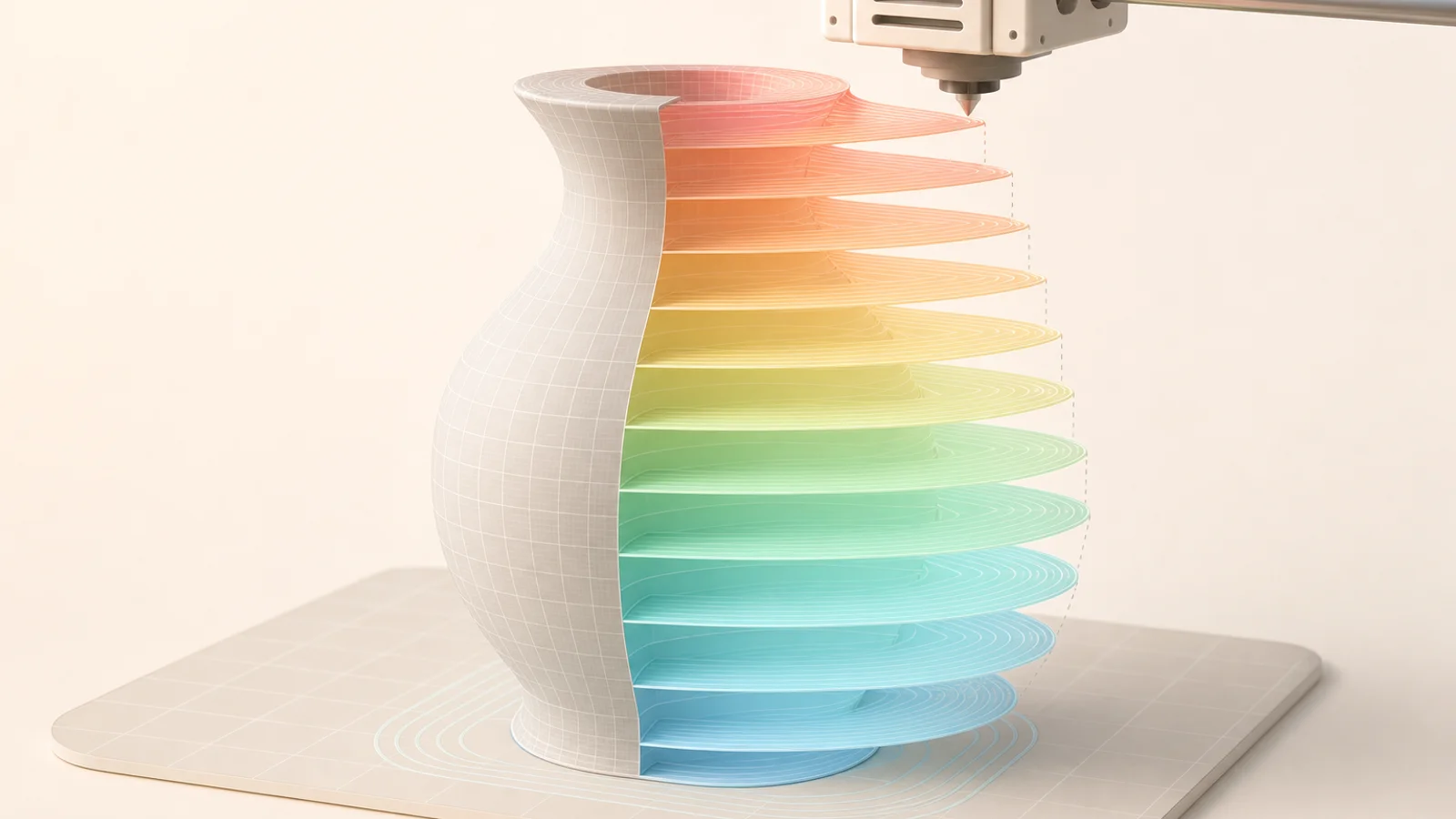
What Is a 3D Printing Slicer? The Translator Between Model and Machine
A beginner-friendly explanation of 3D printing slicers, G-code, layer height, infill, supports, temperatures, speed, and why slicer settings matter so much.
Read article →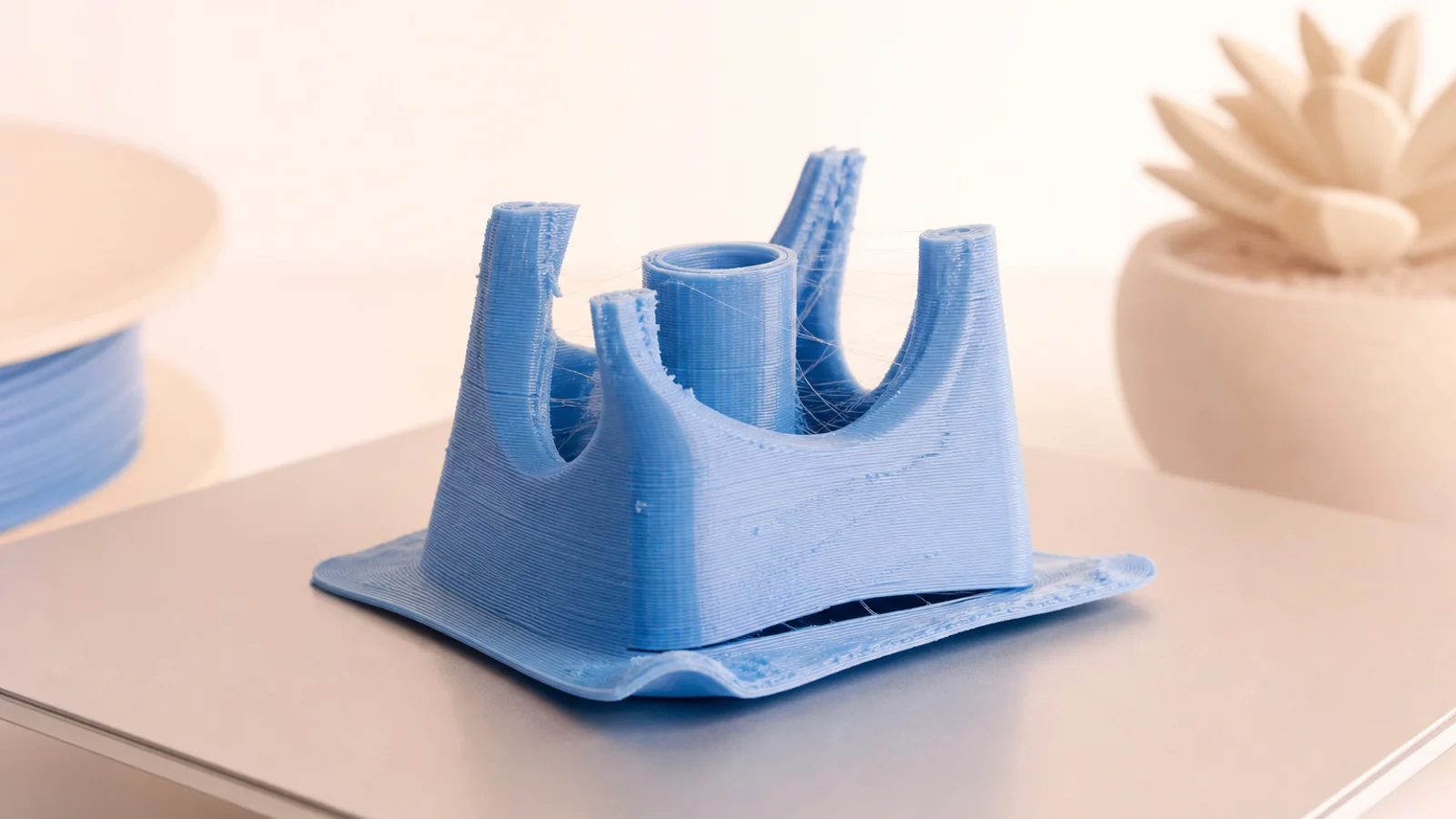
Why 3D Prints Fail: First Layers, Spaghetti, and Tiny Mechanical Drama
A beginner-friendly guide to common 3D printing failures, including first layer problems, spaghetti prints, warping, clogs, stringing, supports, and slicer mistakes.
Read article →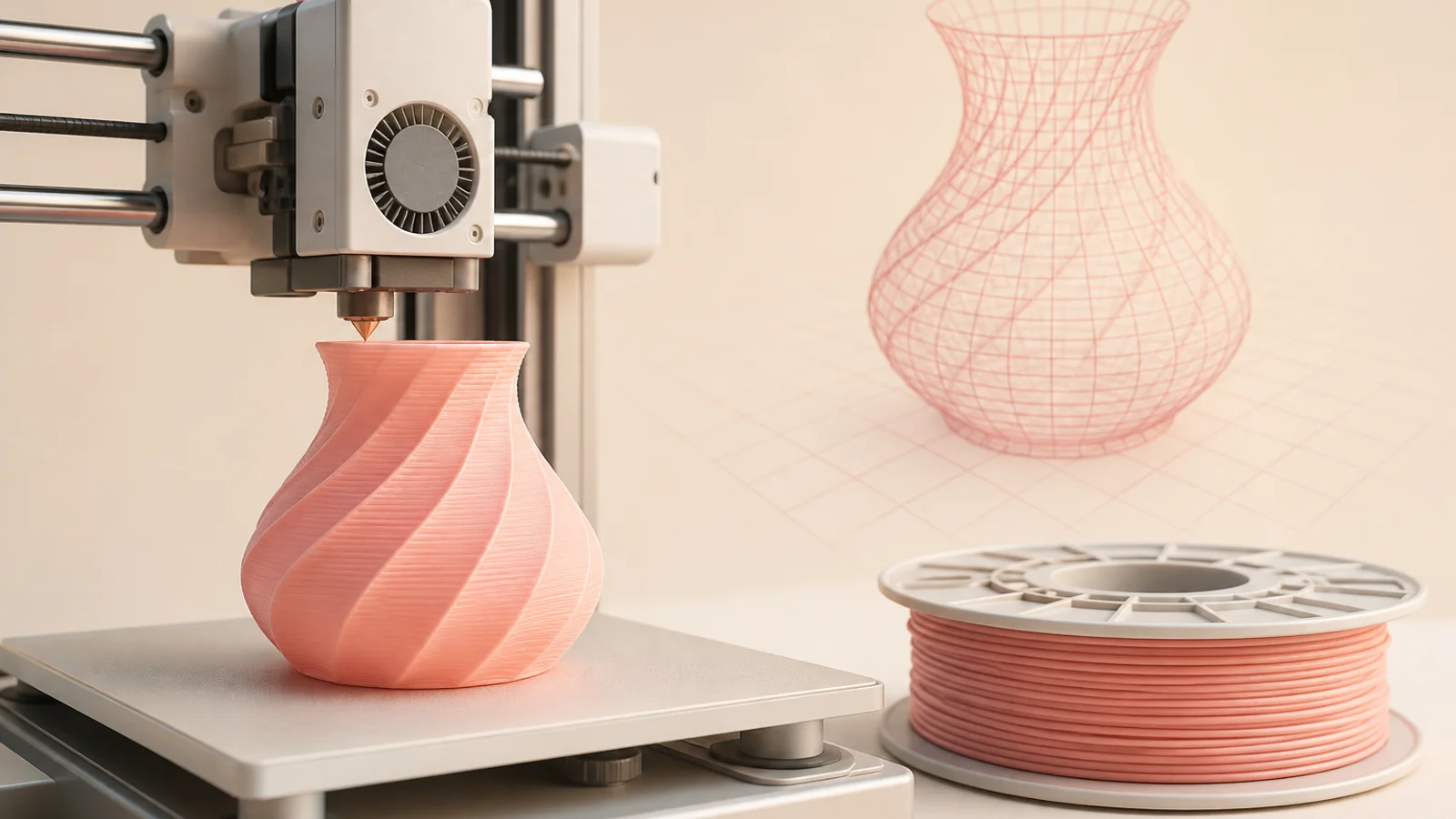
3D Printing Basics: From Digital Model to Physical Object
A beginner-friendly explanation of how 3D printing works, from digital models and slicers to filament, layers, supports, failed prints, and real objects.
Read article →